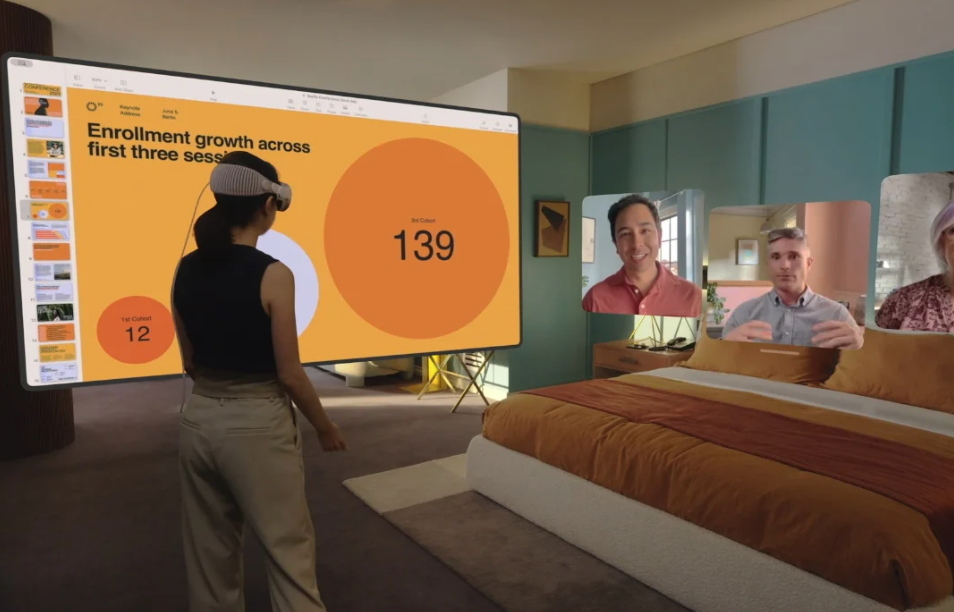
AR overlays digital elements onto the real world, while VR fully immerses users in a simulated environment. The core distinction is augmentation versus immersion. AR maintains awareness of surroundings and supports real-time interaction; VR creates a self-contained, sensory-rich experience. Decision factors include goals, fidelity needs, collaboration, and practical constraints like privacy, cost, and content availability. The choice shapes not just experience, but also how users interact with data and space, leaving a pivotal question unanswered.
How AR Works vs VR: The Core Difference
The core distinction between augmented reality (AR) and virtual reality (VR) lies in how each technology engages with the user’s environment.
AR vs VR shows core difference through layered sight, sound, and interaction.
How AR works vs VR hinges on augmentation versus immersion, projector-free overlays, and controlled immersion.
The core difference rests in perception, freedom-oriented design, and practical applicability.
See also: How Social Engineering Scams Target Crypto Investors
How to Decide Between AR and VR for Your Goals
Choosing between AR and VR hinges on the aims and constraints of a given project: should the user’s real-world context remain visible and interactive, or should full immersion be the objective?
Decision criteria emphasize goal alignment, required sensory fidelity, and collaboration needs.
Consider AI ethics and data privacy implications, including data collection scope, consent, and model bias, to preserve user trust while maximizing outcomes.
AR Use Cases vs VR Use Cases: Real-World Examples
AR and VR demonstrate distinct real-world applications. In practice, AR use cases blend digital overlays with physical tasks, aiding maintenance, remote assistance, and skilled assembly, while VR use cases immerse users in simulated environments for training, design review, and complex simulations.
Both ecosystems prioritize efficiency, safety, and decision speed, yet their strengths diverge, empowering freedom through clarity, accuracy, and scalable experiential control.
What to Consider Before Buying: Tech, Cost, and Access
When evaluating AR and VR purchases, potential buyers should weigh tech specs, total cost of ownership, and access to content and support. The decision hinges on platform openness, update cadence, and troubleshooting reach.
Consider pricing models, subscription vs. one-time fees, and bundled accessories. Assess device durability, software compatibility, and future-proofing to ensure sustainable freedom of exploration with minimal vendor lock-in.
Frequently Asked Questions
Can AR Be Used Offline for Essential Tasks Without Internet?
AR can be used offline for essential tasks, though capabilities depend on hardware and app design; some functions require internet while many essential features operate locally, enabling autonomous workflows and privacy-conscious, offline task execution.
Which Is Better for Education: AR or VR, and Why?
VR edges AR for immersive education ecosystems, but AR wins on accessibility considerations; 76% of learners access AR via mobile devices. The education comparison favors VR for complex simulations, while AR supports hands-on contexts and flexible, scalable learning.
How Do AR Glasses Affect Everyday Comfort and Wearability?
AR comfort and wearability impact include lightweight designs, balanced weight distribution, and responsive ergonomics; extended use can strain the nose bridge or temples. Technically minded observers note adjustability improves AR comfort and reduces fatigue over time.
Are There Health Concerns or Safety Risks With Prolonged Ar/Vr Use?
The image of a mask fading into glass signals potential health risks and privacy concerns. Long term exposure may strain eyes and balance; data collection and privacy concerns loom as devices harvest behavior, preferences, and location, prompting cautious, freedom-loving scrutiny.
What ARe Data Privacy Implications Unique to AR Experiences?
AR experiences raise privacy exposure due to continuous ambient sensing, facial analytics, and location data; organizations should implement data minimization, minimize collection, and enforce strict access controls to protect user autonomy and maintain trust.
Conclusion
In the landscape of perception, AR acts as a heartbeat tracing the real world—visible data flowing through familiar terrain. VR, by contrast, is a closed horizon, a curtain sealed to the senses. Together they map human intent: AR augments, VR immerses. Decisions hinge on purpose, cost, and collaboration. Like lights on a screen, each tech shines when aligned with goals—one to reveal, one to transport. When chosen with intention, the future becomes a navigable, interconnected room rather than a single doorway.
